The Tour de France is one of the most-watched sporting events in the world, yet for many people, it can feel confusing. Let’s take a look at how the Tour de France works.
Why does it last three weeks?
Why do riders help someone else win?
What do the different jerseys mean?
Why do riders attack one day and ride calmly the next?
This guide explains how the Tour de France works, in plain language, for anyone who wants to understand the race without needing a background in cycling.
What Is the Tour de France?
The Tour de France is a three-week professional road cycling race held every July, primarily in France, with occasional stages in neighbouring countries.
Riders compete:
- As part of teams
- Across multiple stages
- On different types of terrain
- For time, not just individual wins
The ultimate goal is simple:
Complete all stages in the shortest total time.
The rider with the lowest overall time wins the Tour de France.
A Very Brief History (For Context)
The Tour de France began in 1903, created to promote a French newspaper.
What started as a publicity stunt quickly became the most demanding race in cycling — and one of the hardest endurance events in sport.
Over time, the Tour evolved into:
- A multi-stage race
- A national and international spectacle
- A proving ground for the world’s best cyclists
While history matters, the modern Tour is best understood by how it works today.
How Long Is the Tour de France?
The Tour lasts 23 days, including:
- 21 racing stages
- 2 rest days
Riders cover roughly 3,300–3,500 kilometres in total.
Stages take place almost every day, meaning riders must balance:
- Speed
- Recovery
- Team tactics
Fatigue is a central part of the race.
What Is a Stage?
Each day of racing is called a stage.
A stage is essentially one day’s race, with:
- A start location
- A finish location
- A set distance (usually 150–220 km)
Each stage counts toward the overall time.
There are different types of stages, and understanding them is key to understanding the Tour.
Types of Tour de France Stages
1. Flat Stages (Sprinters’ Days)
These stages are mostly flat and usually end in a mass sprint.
- The main group (peloton) stays together
- Teams protect their sprinters
- The final few kilometres are fast and chaotic
These stages rarely change the overall standings — but they’re crucial for sprinters and teams chasing stage wins.
2. Hilly Stages
Hilly stages include short climbs and rolling terrain.
- Breakaways often succeed
- Punchy riders thrive
- Time gaps can form
These stages are unpredictable and often exciting.
3. Mountain Stages
Mountain stages define the Tour.
They include long climbs in ranges like:
- The Alps
- The Pyrenees
- The Massif Central
On these days:
- Strong climbers attack
- Time gaps between favourites grow
- The overall race is often decided
Mountain stages are where the Tour is truly won or lost.
4. Time Trials (Racing Against the Clock)
In a time trial, riders start one by one and race alone.
- No drafting
- No teammates
- Pure effort
Time trials reward riders who can sustain high power over long periods and often create significant changes in the overall standings.
Teams: Why Riders Don’t Ride for Themselves
Each Tour team has 8 riders.
Only one rider is usually designated as the team’s leader for the overall victory. The others act as domestiques — helpers.
Domestiques:
- Protect their leader from wind
- Chase breakaways
- Fetch food and water
- Set pace in the mountains
- Sacrifice their own chances
This is why you’ll see riders working hard even though they’re not trying to win themselves.
How the Overall Winner Is Decided
The Tour de France is won on cumulative time.
After each stage:
- Riders’ times are added to their total
- The rider with the lowest total time leads the race
This rider wears the yellow jersey.
Importantly:
- Winning individual stages doesn’t guarantee overall victory
- Consistency matters more than flashy wins
The Jerseys Explained (In Simple Terms)
🟡 Yellow Jersey — Overall Leader
The most important jersey.
Worn by the rider with the lowest total time across all stages.
🟢 Green Jersey — Points Classification
Awarded to the best sprinter.
Riders earn points from:
- Stage finishes
- Intermediate sprints
This competition rewards speed and consistency on flat stages.
🔴⚪ Polka Dot Jersey — King of the Mountains
Awarded to the best climber.
Points are earned by being first over mountain summits.
The steeper and longer the climb, the more points available.
⚪ White Jersey — Best Young Rider
Awarded to the best rider under 25 years old in the overall standings.
Often worn by future stars.
What Is a Breakaway?
A breakaway is a small group of riders who escape from the main peloton early in a stage.
Reasons riders join breakaways:
- To win a stage
- To gain TV exposure for their team
- Collect points for classifications
Sometimes breakaways are caught. Sometimes they succeed — especially on hilly days.
What Is the Peloton?
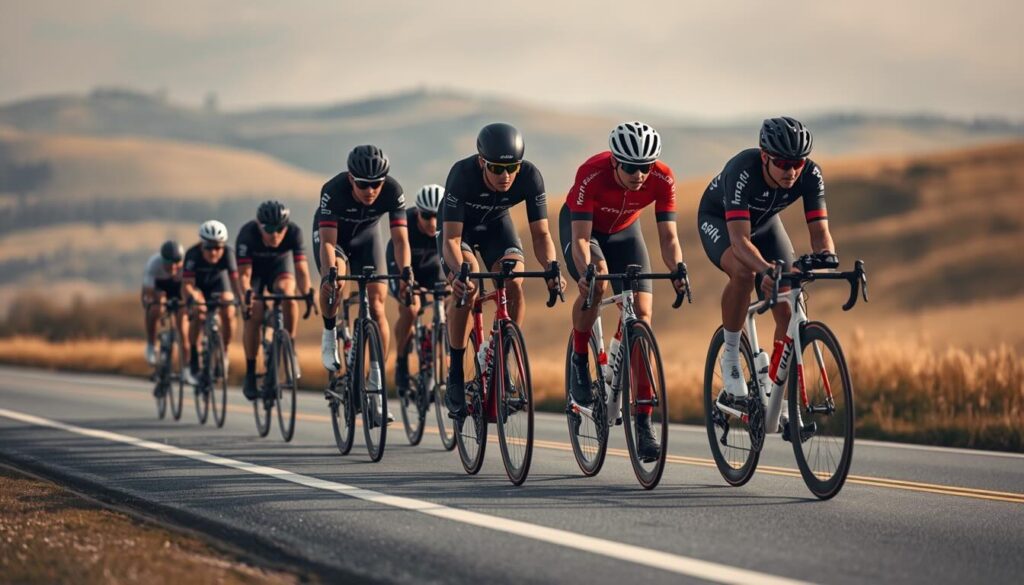
The peloton is the main group of riders.
Riding in the peloton:
- Saves energy
- Reduces wind resistance
- Allows teams to control the race
Most of the Tour is spent riding within this group.
Why Don’t Riders Attack All the Time?
Because the Tour is about energy management.
Attacking constantly would:
- Exhaust riders
- Ruin chances later in the race
- Help rivals
Smart riders choose when to attack — usually in the mountains or time trials.
Rest Days: Why They Matter
There are two rest days during the Tour.
Riders use them to:
- Recover physically
- Receive treatment
- Travel between regions
Without rest days, finishing the Tour would be nearly impossible.
How Do Riders Win Without Winning Stages?
A rider can win the Tour without winning a single stage.
If they:
- Finish consistently near the front
- Lose little time on bad days
- Gain time in key moments
This is why overall winners often look calm and controlled rather than aggressive every day.
How to Watch the Tour (and Actually Enjoy It)
When watching:
- Focus on mountain stages and time trials
- Watch how teams position themselves
- Notice who looks comfortable late in climbs
- Pay attention to time gaps, not just finish lines
The drama often builds slowly — and explodes when fatigue takes over.
Why the Tour de France Is Unique
No other event combines:
- Endurance
- Teamwork
- Strategy
- Individual brilliance
- Geography
The Tour isn’t one race — it’s 21 different races linked by time.
That’s what makes it so compelling.
Final Thoughts: A Race You Grow Into
The Tour de France can seem overwhelming at first.
But once you understand:
- How time matters
- Why teams exist
- What different stages demand
It becomes one of the most fascinating sporting events in the world.
You don’t need to know every rider or tactic.
You just need to understand what’s at stake.
And once you do, it’s hard not to be drawn in.