Legendary machines that helped shape cycling’s greatest race. Let’s check out the best and most successful bikes in the Tour de France.
For over a century, the Tour de France has been the ultimate proving ground for road bikes. Riders may win the race, but the machines beneath them often become just as legendary.
Some bikes have dominated entire eras of the Tour, helping their riders climb faster, descend with more confidence, and hold speed across long stages. These bikes represent the evolution of cycling technology, from steel frames and downtube shifters to today’s aerodynamic carbon machines.
Here are some of the most successful and iconic bikes ever ridden to victory in the Tour de France.
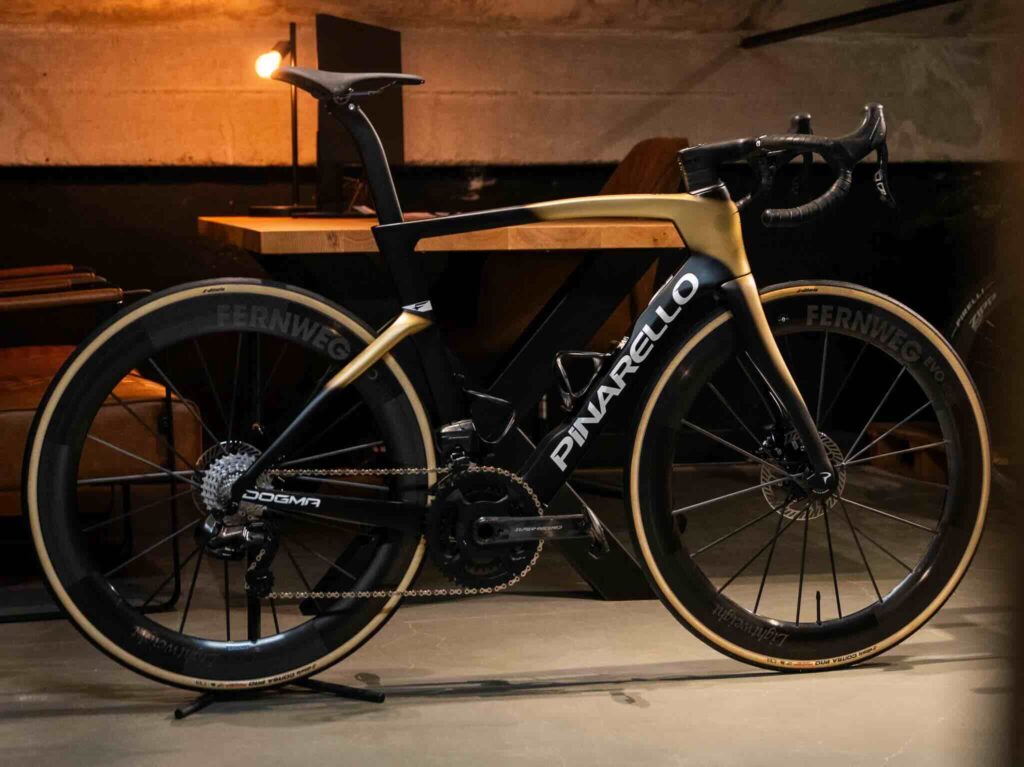
Pinarello Dogma
The most dominant modern Tour de France bike
In the modern era of professional cycling, few bikes have been as successful as the Pinarello Dogma.
Ridden by Team Sky and later INEOS Grenadiers, the Dogma helped deliver multiple Tour victories, including wins by:
- Bradley Wiggins (2012)
- Chris Froome (2013, 2015, 2016, 2017)
- Geraint Thomas (2018)
- Egan Bernal (2019)
The Dogma’s success comes from its combination of stiffness, aerodynamics, and lightweight carbon construction. It’s widely considered one of the most technologically advanced race bikes ever built.
Trek Madone
The bike of cycling’s most controversial champion
The Trek Madone became famous during the early 2000s when it was ridden by Lance Armstrong during his Tour campaigns.
Although Armstrong’s titles were later stripped due to doping violations, the Madone itself became one of the most influential race bikes ever created.
The bike introduced several innovations:
- Advanced carbon fibre frames
- Early aerodynamic frame shaping
- Integrated component design
Today the Madone remains Trek’s flagship aero road bike and continues to appear in the professional peloton.
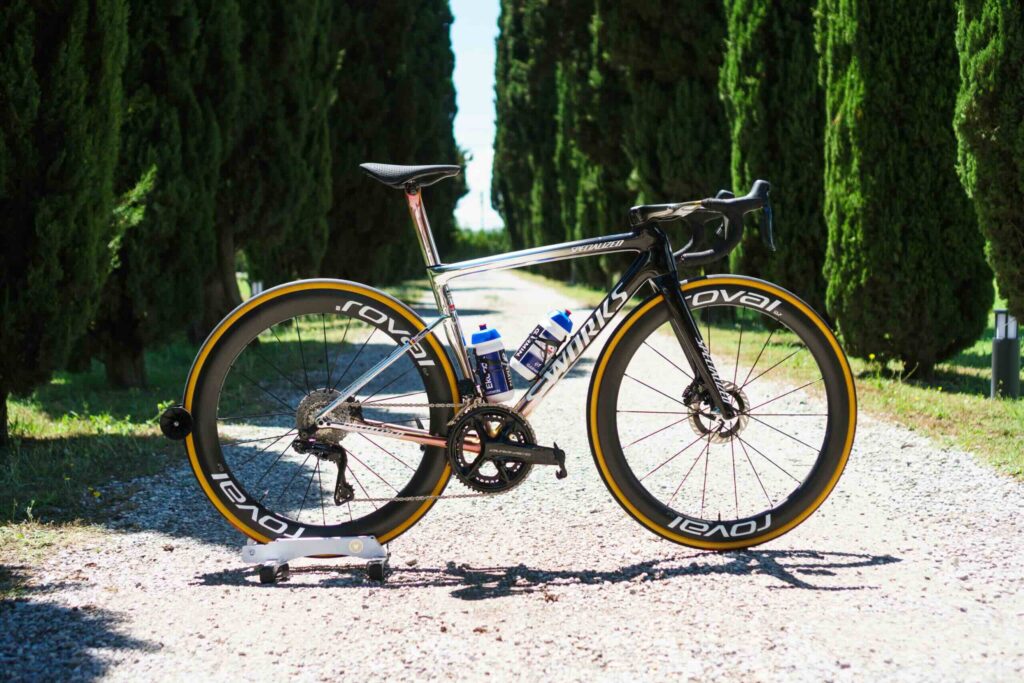
Specialized Tarmac
A modern all-round race machine
The Specialized Tarmac has become one of the most successful bikes in modern Tour history.
Lightweight, stiff, and versatile, the Tarmac has helped deliver multiple Tour wins, including the victory of Tadej Pogačar in 2020 and 2021.
What makes the Tarmac special is its all-round performance — it climbs extremely well but is also fast on flat stages and descents.
Key features include:
- Extremely lightweight carbon frame
- Aero-optimised tubing
- Exceptional stiffness-to-weight ratio
It’s widely considered one of the best all-round race bikes in professional cycling.
Cannondale SuperSix EVO
A climbing specialis
The Cannondale SuperSix EVO has earned a reputation as one of the best climbing bikes in professional cycling.
Its lightweight design and responsive handling make it ideal for the high mountains where the Tour is often decided.
Professional riders have praised the SuperSix for:
- Exceptional climbing ability
- Balanced handling
- Lightweight construction
While it hasn’t dominated the Tour like some other bikes, it remains a favourite among climbers and aggressive racers.
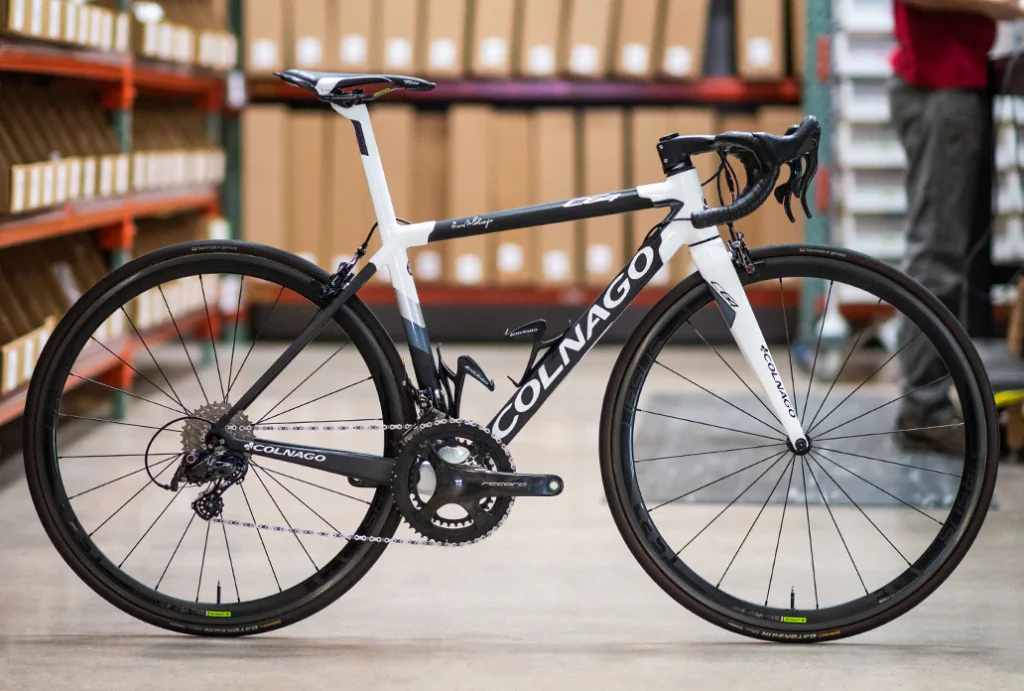
Colnago C64
A bike with deep Tour de France heritage
Colnago has a long history in the Tour de France, supplying bikes to some of the sport’s greatest champions.
The modern Colnago C64 continued that tradition when it was ridden by Tadej Pogačar during his Tour success with UAE Team Emirates.
Colnago bikes are known for:
- Precision Italian craftsmanship
- Exceptional ride quality
- Race-winning heritage
Few brands carry as much historical prestige in the peloton.
How Tour de France Bikes Have Evolved
The bikes ridden in the Tour have changed dramatically over the decades.
Early Tour winners rode heavy steel bikes weighing more than 15 kg, often with minimal gearing and basic brakes.
Today’s professional race bikes feature:
- Carbon fibre frames
- Electronic shifting systems
- Aerodynamic optimisation
- Lightweight components under 7 kg
Despite these changes, the goal remains the same: build the fastest possible bike for climbing mountains and racing across France.
What Makes a Great Tour de France Bike?
The best Tour bikes typically excel in several key areas:
Lightweight performance – essential for climbing mountain stages.
Aerodynamics – crucial for maintaining speed on flat stages.
Handling stability – important for high-speed descents.
Stiffness and efficiency – maximising power transfer from rider to road.
When these qualities come together, the result is a machine capable of winning cycling’s greatest race.
Final Thoughts
The Tour de France has showcased some of the greatest road bikes ever built. From the technological dominance of the Pinarello Dogma to the versatile performance of the Specialized Tarmac, these bikes represent the pinnacle of racing engineering.
While riders ultimately win the race, the bikes beneath them play a critical role in shaping cycling history.
And for cycling fans around the world, these machines are more than just equipment. They are symbols of the sport’s greatest victories.