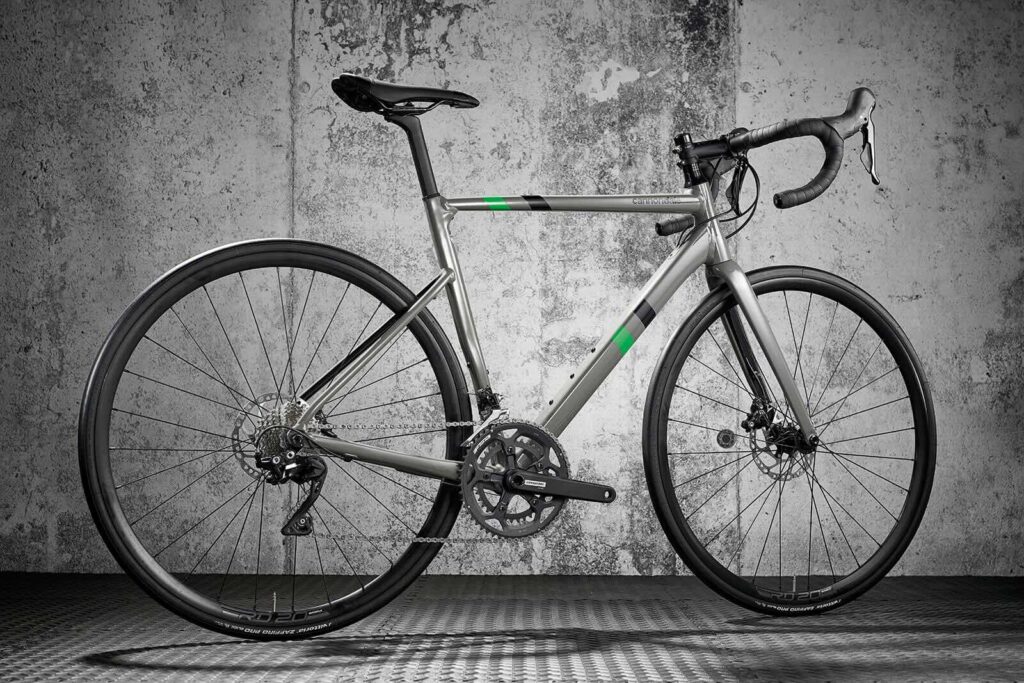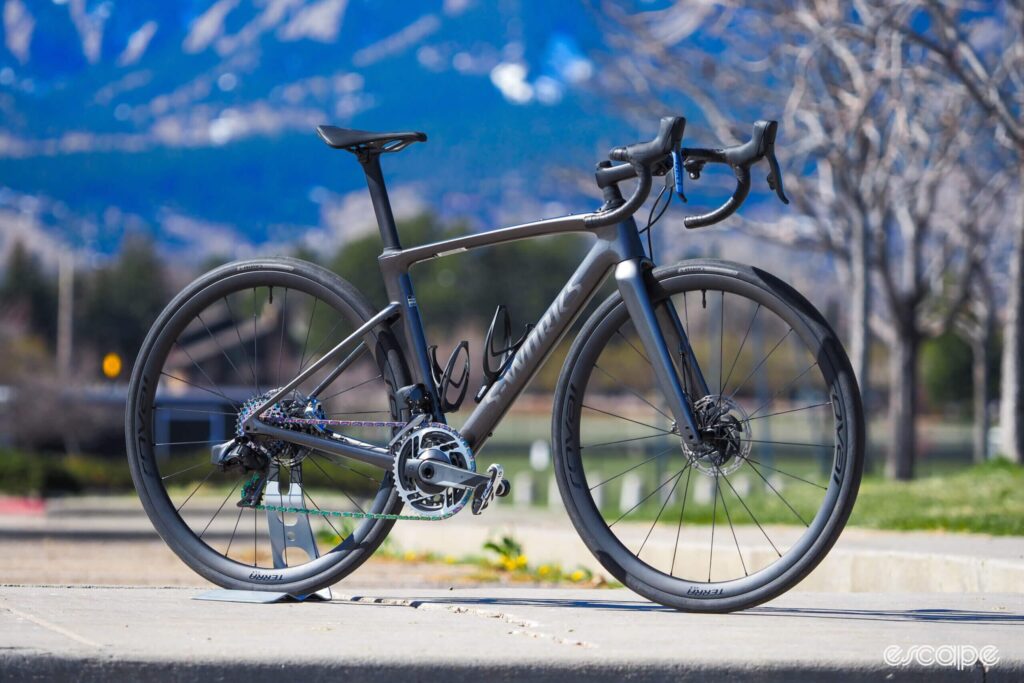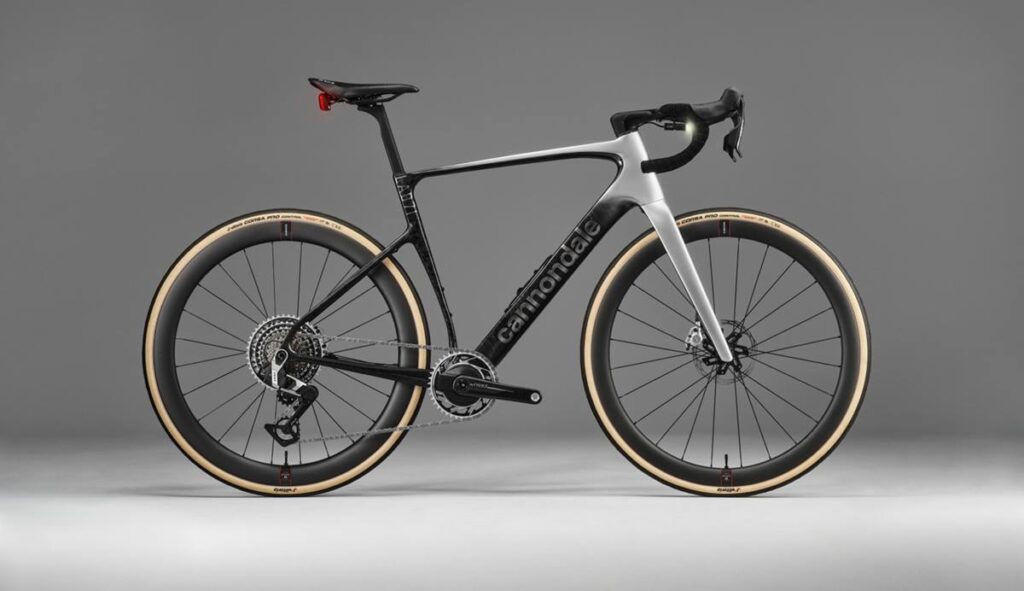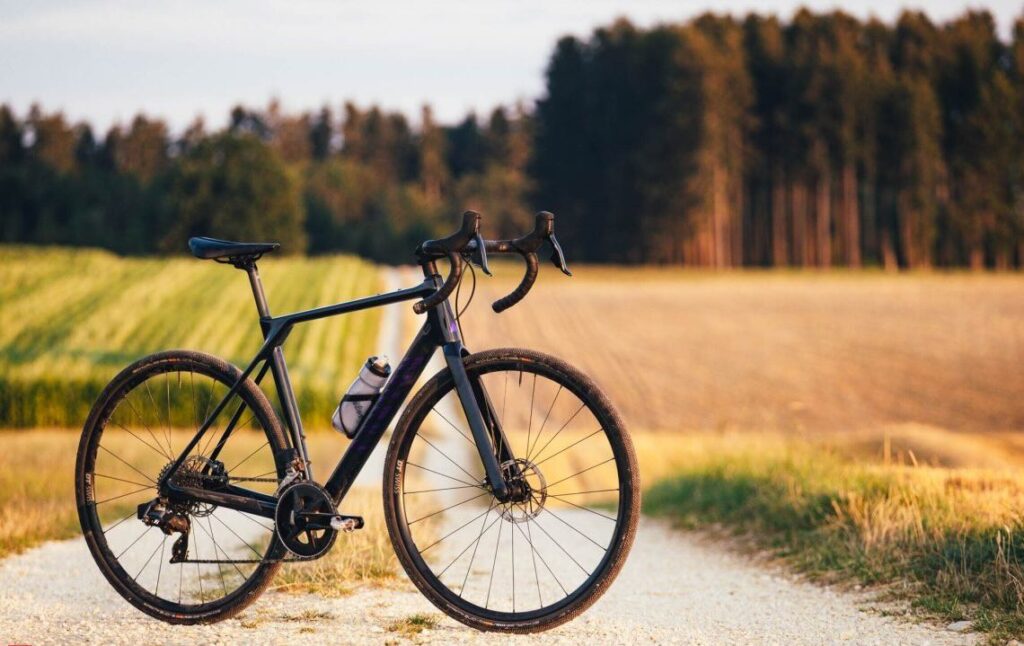
The do-everything race bike that actually rides like one. Let’s explore more in the full Specialized Tarmac SL7 review.
Specialized Tarmac has been one of cycling’s most influential race bikes for a decade, and the SL7 represents the latest evolution: a bike that blends lightweight climbing ability, aerodynamic efficiency, and ride quality into one coherent platform.
It’s the kind of bike that doesn’t demand to be ridden fast. It thrives when you do.
Overview / Verdict Up Front
Who this bike is for:
- Riders who want a true race bike that’s also livable on long, real-world rides
- Competitive cyclists and fast group riders
- Climbers, all-rounders, and racers who want versatility from one machine
Who this bike isn’t for:
- Riders who only care about pure comfort first
- Those wanting the cheapest bike for their first road ride
- People who exclusively ride rough, chipseal roads (Roubaix or gravel might fit better)
Quick take:
The Tarmac SL7 is one of the rare bikes that lives up to its hype. It’s light enough for serious climbing, stiff and stable for fast efforts, and aero enough to feel confident at speed, without compromising the things that matter on the road.
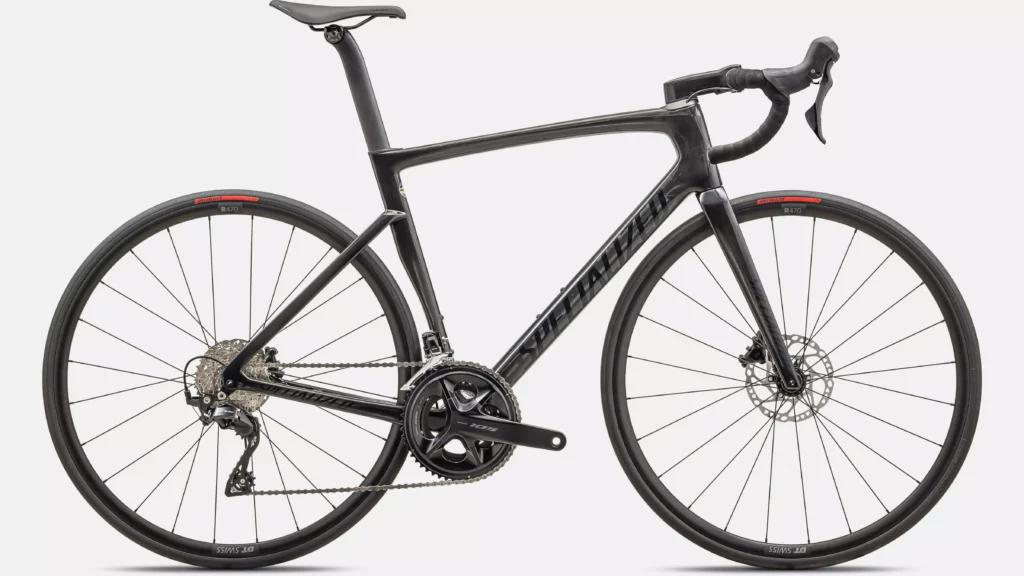
Key Specs (Real-World Relevant)
- Frame Material: FACT 12r Carbon
- Fork: FACT carbon, aero-optimised
- Brake Type: Disc brakes (flat mount, thru-axle)
- Geometry: Race-oriented (modern stack/reach balance)
- Tire Clearance: Typically up to ~32mm (varies by model)
- Intended Use: All-around performance, climbing, racing
Available in multiple build levels, typically with Shimano or SRAM groupsets, often Shimano Ultegra, Ultegra Di2, and Dura-Ace Di2, plus differing wheel and cockpit options.
Ride Impressions (Core Section)
Comfort: Purposeful, Not Plush
A “race bike” often connotes stiffness at any cost, and while the SL7 is stiff where it matters, it’s not punishing. The frame’s compliance-tuned layup smooths out higher-frequency vibration without dulling the bike’s responsiveness.
On real roads, that means:
- Harsh chipseal is less fatiguing than expected
- Longer rides feel more natural than on old-school race frames
- The bike doesn’t punish in the way “race geometry” sometimes implies
This isn’t an endurance bike, but it’s comfort-aware.
Handling: Sharp, Predictable, and Confident
The SL7 rides like a bike that knows where it’s going.
- Quick turn-in through corners
- Stable at speed
- Predictable in technical sections
At pace, the bike feels connected. You know exactly where the contact patches are and what they’re doing. The geometry isn’t twitchy, but it’s eager.
For group rides and fast descents, the Tarmac feels like a trustworthy partner, not a temperamental race tool.
Stiffness & Acceleration: Immediate Power Transfer
Out of the saddle sprints and sudden accelerations are crisp. You press the pedals, and the bike answers — almost without delay.
That stiffness without harshness balance is a hallmark of the SL7. It’s:
- Efficient on climbs
- Explosive on accelerations
- Stable under sprint loads
This makes it a bike that feels fast even when you’re just riding at tempo.
Climbing: Light Enough, Aerodynamic Advantage
The Tarmac SL7 doesn’t feel like a pure “climber’s bike” in the way ultra-light machines do, yet it climbs very well.
It hits a sweet spot:
- Not the absolute lightest
- But supremely efficient
- And often faster overall on rolling terrain than lighter but less aero bikes
On long climbs, especially when the road isn’t perfectly steep but constantly changing, the SL7’s balance pays off.
Descending: Confidence and Composure
This bike shines on descents. The combination of:
- Disc brake stability
- Responsive steering
- Aerodynamic integration
It all adds up to a machine you can lean into with confidence. On fast technical downhills, the Tarmac inspires trust, it doesn’t feel nervous or vague, even when pushing hard.
Long Rides (3–7 Hours): Endurance With Punch
Despite its race DNA, the SL7 is surprisingly civilised on longer rides.
The position isn’t extreme, and the bike’s compliance features are quiet enough vibration that fatigue doesn’t spike early. Pair it with 28–30mm tyres and sensible pressures, and the Tarmac turns rough pavement into manageable pavement.
Geometry & Fit
The SL7 sits firmly in modern race geometry:
- Stack and reach that balance aggression with sustainability
- Lower than endurance bikes, higher than classic aero race frames
- Fit that suits a wide range of riders without forcing an overly aggressive posture
Riders coming from:
- Pure endurance bikes → It feels sportier and more dynamic
- Older race bikes → It feels more comfortable and composed
This broader usability makes it a go-to for riders who want one bike that does everything well.
Components & Build Options
The Tarmac SL7 is offered in multiple trims:
- Shimano Dura-Ace Di2 builds — ultra-premium, lightweight, and quick
- Shimano Ultegra Di2 — excellent price/performance balance
- Mechanical Ultegra / 105 — strong value builds
- SRAM AXS builds also appear in certain markets
The components are well chosen, with little wasted on flash and much invested in durability and performance.
One consistent theme: wheels and tyres matter here. Upgrading stock wheels often delivers one of the biggest real-world gains you can feel on this bike.
Tyres, Wheels & Clearance
Designed around up to 32mm tyre clearance (depending on build and rim choice).
Real-world recommendation:
- 28–30mm for most road riding
- 30–32mm if you encounter rougher pavé, chipseal, or long sportives
The additional comfort, grip, and confidence make these widths feel right on a race bike that still wants to be used on real roads.
Comparisons
Tarmac SL7 vs Specialized Roubaix
| Feature | Tarmac SL7 | Roubaix |
|---|---|---|
| Race Performance | ⭐⭐⭐⭐⭐ | ⭐⭐⭐ |
| Comfort (rough roads) | ⭐⭐⭐⭐ | ⭐⭐⭐⭐⭐ |
| Climbing | ⭐⭐⭐⭐ | ⭐⭐⭐ |
| Descending at speed | ⭐⭐⭐⭐⭐ | ⭐⭐⭐⭐ |
| Everyday usability | ⭐⭐⭐⭐ | ⭐⭐⭐⭐⭐ |
Tarmac = faster, sharper, and more versatile.
Roubaix = more compliant and more comfort-oriented.
Tarmac SL7 vs Canyon Ultimate
Both are strong all-round race bikes.
- Tarmac SL7: refined ride feel, strong rider support, integrated tech
- Ultimate: excellent value and performance spread, slightly different handling personality
Both compete near the top of the category; choice often comes down to fit preference and brand alignment.
Pros & Cons
Pros
- Outstanding all-around performance
- Excellent balance of stiffness, comfort, and aero
- Confident handling
- Great component integration
- Works for racing and spirited group rides
Cons
- Stock wheels are solid but upgradable
- Not the plushest over extremely rough roads
- Premium builds are expensive
Who Should Buy This Bike?
Perfect for:
- Racers wanting race-ready performance
- Fast group riders
- Climbers who also travel with their bike
- Cyclists who want one bike that does it all
Less ideal for:
- Riders who prioritise absolute comfort above all
- Cyclists who never ride rough roads
- Those looking for a budget-only bike
Final Thoughts
The Specialized Tarmac SL7 is one of those bikes that lives up to its reputation.
It’s not a compromise, it’s a thoughtful balance:
- Lightweight enough for climbs
- Aerodynamic enough for flats
- Responsive enough for sprints
- Composed enough for long rides
It’s a race bike unmistakably, but it’s also a real-world bike. That’s why it resonates with so many riders: it’s fast without being uncomfortable, aggressive without being harsh, and versatile without confusion.
For riders who want a true do-everything performance bike. This is one to take seriously.
Quick Summary
Best for: All-around performance, racing, spirited group rides
Ideal tyre size: 28–32mm
Sweet spot: Versatility + speed + real-world practicality
Weakness: Not the most forgiving on ultra-rough roads