Few bike brands have challenged convention as consistently or as loudly as Cannondale.
From oversized aluminum tubes to left-handed forks, from handmade frames in the USA to some of the most recognizable road bikes of the modern era, Cannondale has always done things its own way. Sometimes that meant getting it spectacularly right. Sometimes it meant taking risks others wouldn’t.
But one thing has always been true: Cannondale never followed the crowd.
This is the story of how a small American company grew into one of the most influential bike brands in the world — and how it helped shape what modern road bikes look and feel like today.
The Founder: Joe Montgomery and the Birth of Cannondale
Cannondale was founded in 1971 by Joe Montgomery, a visionary entrepreneur with a background in outdoor equipment rather than bicycle manufacturing.
Montgomery wasn’t trying to start a bike brand. He was trying to solve problems.
At the time, he and his team were focused on designing innovative, practical gear for active people, beginning with backpacks and bike-mounted luggage. Their early products reflected a mindset that would later define Cannondale bikes themselves: functionality first, durability always, and a willingness to question how things had “always been done.”
The company name came not from a grand branding exercise, but from something simple and local, the Cannondale train station near where Montgomery lived in Connecticut. That understated origin story mirrors the company’s early years: practical, unpretentious, and quietly ambitious.
Montgomery’s leadership helped establish Cannondale’s core philosophy long before the company ever built a bicycle:
- Design should solve real problems
- Materials should be used boldly, not traditionally
- Innovation should be visible, not hidden
When Cannondale eventually entered the bicycle market in the early 1980s, this mindset carried over seamlessly. The decision to embrace aluminum frames, oversized tubing, and American manufacturing wasn’t about being different for the sake of it — it was about building bikes the way Montgomery believed they should be built.
Although Joe Montgomery eventually stepped away from day-to-day involvement, his influence remains deeply embedded in Cannondale’s DNA. The brand’s willingness to take risks, challenge tradition, and prioritise engineering over convention can be traced directly back to its founder’s original vision.
In many ways, Cannondale’s story isn’t just about bikes, it’s about what happens when practical thinking meets bold execution.

The Beginning: Not a Bike Company at All (1971–1982)
Cannondale was founded in 1971 in Wilton, Connecticut, but not as a bicycle manufacturer.
The company originally made backpacks and bags, designed to be attached to bikes. The name “Cannondale” came from the Cannondale train station near where the founders lived, not from anything cycling-related.
Early Cannondale products were practical, functional, and built with a focus on durability and problem-solving — values that would later define the brand’s approach to bikes themselves.
It wasn’t until the early 1980s that Cannondale made a bold move: they started building bicycles.
Aluminum Changes Everything (1983–1990)
At a time when most high-end road bikes were still made from steel, Cannondale went all-in on aluminum frames.
This was radical.
Steel had tradition. Aluminum had a reputation for being harsh, cheap, and uncomfortable. Cannondale didn’t accept that — instead, they rethought how aluminum frames were built.
Oversized Tubes, American Thinking
Cannondale pioneered the use of:
- Oversized aluminum tubing
- TIG welding instead of lugs
- Frames built for stiffness and efficiency
The result? Bikes that were lighter, stiffer, and immediately recognisable.
Cannondale frames didn’t whisper tradition — they announced themselves. The large tubes became a visual signature, especially on road models like the early SR and R-series bikes.
By the late 1980s, Cannondale had established itself as:
- A serious performance brand
- A challenger to European steel dominance
- A symbol of American engineering confidence
Handmade in the USA: The Bedford Era (1990s)
One of Cannondale’s defining chapters was its decision to manufacture frames in the United States.
At its factory in Bedford, Pennsylvania, Cannondale produced aluminum frames by hand — a rarity even at the time, and almost unheard of today.
Frames proudly wore decals reading:
“Handmade in the USA”
This mattered. Riders didn’t just buy a Cannondale because it was fast — they bought it because it stood for:
- Craftsmanship
- Transparency
- A belief that aluminum could be premium
During this era, Cannondale road bikes became common sights in:
- Amateur racing
- Club rides
- Professional pelotons
Racing Success and Pro Credibility
Cannondale wasn’t content being a “good bike for enthusiasts.” They wanted to win.
Throughout the 1990s and 2000s, Cannondale sponsored professional teams and riders, building credibility at the highest level of the sport.
Notable Pro Associations
- Saeco–Cannondale (late 1990s / early 2000s)
- Riders like Mario Cipollini and Ivan Basso
- Stage wins and classics success
Cannondale bikes proved they weren’t just stiff and light — they were race-worthy.
The CAAD Legacy: Aluminum Perfection
If Cannondale has a single defining road-bike lineage, it’s CAAD.
CAAD stands for Cannondale Advanced Aluminum Design, and the series represents decades of refinement in aluminum frame building.
Why CAAD Bikes Became Legends
CAAD frames:
- Were lighter than many carbon bikes of their era
- Offered razor-sharp handling
- Delivered incredible power transfer
- Lasted for years
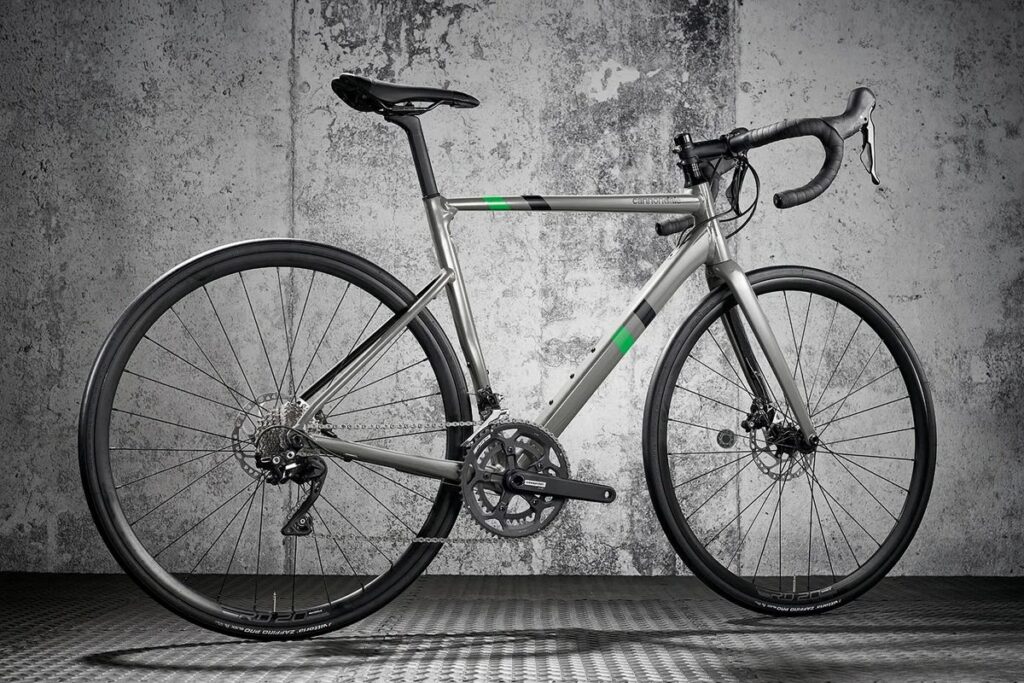
Models like the CAAD5, CAAD9, CAAD10, and CAAD12 gained cult status.
Even today, the CAAD13 is widely regarded as one of the best aluminum road bikes ever made — often outperforming cheaper carbon frames in real-world riding.
For many cyclists, a CAAD bike was:
- Their first “serious” road bike
- A bike they regret selling
- Proof that aluminum could feel alive, not harsh

Carbon Fiber — The Cannondale Way (2000s–2010s)
Cannondale didn’t rush into carbon. When they did, they did it their way.
Instead of outsourcing frame production early on, Cannondale invested heavily in in-house carbon engineering, including advanced layup techniques and structural testing.
Key Carbon Innovations
- BallisTec Carbon – focusing on impact resistance and durability
- Tube-to-tube and monocoque designs
- Frames tuned for stiffness where it mattered, comfort where it counted
This led to bikes like:
- SuperSix – lightweight, balanced, race-ready
- Synapse – endurance-focused, comfortable, and versatile
These bikes reflected Cannondale’s core philosophy: engineering first, marketing second.
Always Different: Lefty Forks and Bold Ideas
Cannondale has never been afraid to look strange.
Perhaps no innovation symbolises this more than the Lefty fork — a single-sided suspension fork that defied conventional design. While more common on mountain bikes, it represented Cannondale’s willingness to challenge assumptions.
The same thinking applied across the brand:
- Asymmetric frame designs
- Unique tube shapes
- Integration without gimmicks
Some ideas were controversial. Some were brilliant. But none were boring.
The Synapse: Comfort Before It Was Cool
Long before “endurance road bikes” became a dominant category, Cannondale was already there.
The Cannondale Synapse focused on:
- Longer wheelbases
- More upright geometry
- Built-in compliance
- Wider tire clearance
It appealed to riders who wanted:
- Long rides without fatigue
- Stability on rough roads
- Real-world comfort
Today, the Synapse is one of the most recognisable endurance road bikes on the road — a quiet success built on thoughtful design rather than hype.
Modern Cannondale: Global, But Still Distinct
Like many brands, Cannondale eventually moved away from US frame manufacturing. The cycling industry became global, and production shifted.
But the identity remained.
Modern Cannondale bikes still reflect the brand’s DNA:
- Clean, purposeful aesthetics
- Emphasis on ride feel
- Willingness to be different
Current road highlights include:
- SuperSix EVO – a lightweight, all-round race bike
- Synapse Carbon – endurance without compromise
- CAAD13 – aluminum perfection refined
Why Cannondale Still Matters
Cannondale matters because it questioned assumptions — and kept doing so.
It proved:
- Aluminum could be premium
- American engineering could compete globally
- Comfort and performance weren’t opposites
- Bikes didn’t have to look traditional to ride brilliantly
For many cyclists, Cannondale represents thinking for yourself — choosing function over fashion, and ride quality over reputation.
Cannondale: Timeline
This timeline traces Cannondale’s evolution from a small American accessories company to one of the most influential bike brands in the world — highlighting the moments that shaped modern road cycling.
🕰️ 1971 — Cannondale Is Founded (Not as a Bike Brand)
Cannondale is founded in Wilton, Connecticut, originally producing bike luggage and accessories, not bicycles. The company name comes from the nearby Cannondale train station. At this stage, there is no intention of becoming a bike manufacturer — just a focus on practical, rider-first products.
🚲 1983 — Cannondale Builds Its First Bicycle
Cannondale officially enters the bicycle market with a bold decision: to focus on aluminum frames at a time when steel dominates high-end cycling. This sets the tone for the brand’s future — innovative, unconventional, and engineering-driven.
🔩 Mid–1980s — Oversized Aluminum Tubes Change the Game
Cannondale pioneers the use of oversized aluminum tubing and TIG welding. The result is a new kind of road bike: stiffer, lighter, and instantly recognisable. Cannondale frames stand out visually and philosophically from traditional European steel designs.
🇺🇸 Early 1990s — Handmade in the USA (Bedford, Pennsylvania)
Cannondale begins producing frames at its factory in Bedford, Pennsylvania, proudly labelling them “Handmade in the USA.” This era cements Cannondale’s reputation for craftsmanship, transparency, and domestic manufacturing — rare even at the time.
🏁 1990s — Cannondale Enters Professional Racing
Cannondale gains pro-level credibility by sponsoring teams and riders in international racing. Its bikes prove they can win at the highest level, helping dispel the myth that aluminum bikes are inferior to steel.
🧠 Late 1990s — CAAD Is Born
Cannondale introduces CAAD (Cannondale Advanced Aluminum Design), formalising its aluminum expertise into a dedicated performance platform. CAAD bikes become renowned for:
- Razor-sharp handling
- Exceptional stiffness-to-weight ratios
- Long-term durability
This lineage will go on to define Cannondale’s road-bike identity for decades.
🔥 Early 2000s — CAAD Becomes Legendary
Models like the CAAD5 and CAAD7 gain cult status among racers and enthusiasts. Cannondale aluminum frames begin to outperform many early carbon bikes, proving that material choice matters less than execution.
🏆 2000s — Grand Tour Success and Global Recognition
Cannondale-sponsored teams, including Saeco–Cannondale, achieve stage wins and major results in Grand Tours. The brand earns respect not just as an engineering outlier, but as a serious racing contender.
🧪 Mid–2000s — Cannondale Embraces Carbon (On Its Own Terms)
Rather than rushing carbon production overseas, Cannondale invests heavily in in-house carbon engineering, developing its own layups and testing methods. This leads to durable, ride-quality-focused carbon frames rather than ultra-fragile weight chasers.
⚙️ 2010 — The SuperSix Era Begins
The Cannondale SuperSix becomes a flagship lightweight carbon race bike — balanced, stiff, and rideable. It proves Cannondale can compete head-to-head with European carbon race bikes while maintaining its engineering-first ethos.
🛣️ Early 2010s — The Synapse Defines Endurance Road Bikes
Cannondale expands the Synapse platform, focusing on:
- Endurance geometry
- Built-in compliance
- Wider tire clearance
Long before “all-road” bikes become mainstream, the Synapse shows how comfort and performance can coexist.
🔄 2017 — CAAD Goes Disc and Evolves
The CAAD12 pushes aluminum to its limit, becoming one of the lightest and best-riding alloy frames ever made. Shortly after, Cannondale releases the CAAD13, embracing disc brakes, improved aerodynamics, and refined compliance.
🌍 Late 2010s — Manufacturing Goes Global
Like most major brands, Cannondale transitions fully away from US frame manufacturing. While production becomes global, design, testing, and engineering philosophy remain central to the brand’s identity.
🚴♂️ 2020 — SuperSix EVO Is Reimagined
Cannondale launches a completely redesigned SuperSix EVO, blending:
- Aerodynamics
- Lightweight construction
- Ride comfort
It reflects modern road cycling’s shift toward “one-bike-does-it-all” race platforms.
🧭 2020s — Cannondale Today
Today, Cannondale’s road lineup centres around:
- SuperSix EVO — lightweight, race-ready, aero-balanced
- Synapse Carbon — endurance, comfort, real-world versatility
- CAAD13 — aluminum excellence in a disc-brake world
Cannondale continues to stand out by prioritising ride feel, engineering honesty, and functional design over trends.
Final Thoughts: A Brand Built on Conviction
Cannondale’s history isn’t a straight line. It’s full of risks, experiments, successes, and a few missteps.
But it’s also full of conviction.
From handmade aluminum frames in Pennsylvania to carbon race bikes ridden at the highest level, Cannondale has always built bikes with intent — not just to follow trends, but to challenge them.
And that’s why, decades on, Cannondale bikes are still everywhere on the road — still fast, still comfortable, still unmistakably Cannondale.