Cube doesn’t shout the loudest in cycling, but it has quietly built one of the most complete, respected, and widely ridden bike ranges in the world.
From its roots in a small corner of Bavaria to the Tour de France peloton, Cube’s rise has been driven by engineering discipline, value-focused design, and an almost obsessive attention to detail. It’s a brand that prioritises function over flash and has earned its place through consistency rather than hype.
This is the story of Cube Bikes: how it started, how it grew, and why it matters today.
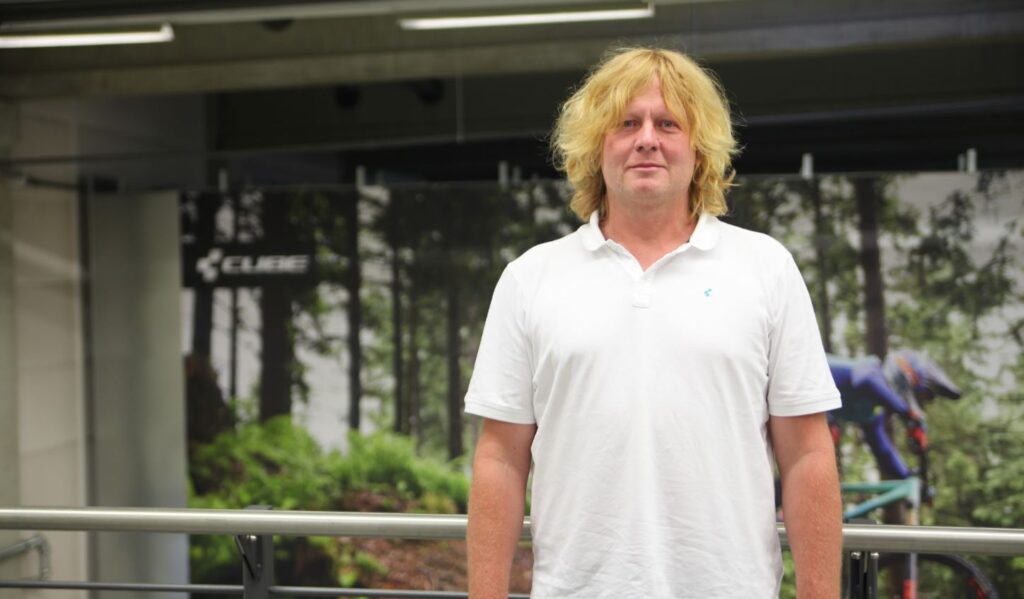
The Founder: Marcus Pürner and a Very German Beginning
Cube was founded in 1993 by Marcus Pürner in Waldershof, Germany.
The origin story is refreshingly simple.
Pürner was a student working in his father’s furniture factory. In a spare corner of the warehouse — just 50 square metres — he began assembling bicycles. There was no grand plan to build a global brand. Just a desire to make well-designed, reliable bikes at fair prices, using German engineering principles.
From the start, Cube was defined by:
- Precision manufacturing
- Logical product ranges
- No-nonsense design
- Strong value for money
That DNA still runs through the brand today.
Early Growth: Building Quietly, Building Well (1990s)
Through the 1990s, Cube focused on:
- Mountain bikes
- Trekking and utility bikes
- Expanding dealer networks in Germany
Rather than chasing professional racing exposure early, Cube concentrated on product quality and consistency. Bikes were designed in Germany, tested rigorously, and refined year after year.
This slow, controlled growth helped Cube establish a reputation in central Europe as a brand you could trust — even if it wasn’t flashy.
The Move Into Performance Road Cycling
Cube’s road bikes began to gain serious traction in the early 2000s, when the brand expanded its performance focus.
Rather than copying Italian or American design language, Cube leaned into:
- Clean, functional aesthetics
- Logical geometry choices
- Competitive pricing without corner-cutting
Road models like the Agree and later the Litening began to attract riders who wanted performance without premium-brand pricing.
Engineering First: Carbon, Aerodynamics, and Integration
Cube invested heavily in:
- In-house carbon development
- Wind tunnel testing
- Frame stiffness optimisation
- Disc brake integration early on
The result was a range of road bikes that felt:
- Stiff where needed
- Predictable at speed
- Surprisingly comfortable over distance
Cube’s design philosophy was never about extremes. Instead, it aimed for balanced performance, making bikes that worked well for most riders, most of the time.
Cube at the Tour de France: Consistent, Not Loud
Cube has never chased the Tour de France spotlight in the way some brands have — but it has built a credible and growing presence at the highest level of the sport.
Pro Teams and the Tour
Cube became a regular sight in the Tour de France through its long-standing partnership with:
- Wanty–Groupe Gobert
- Later Intermarché–Wanty–Gobert Matériaux
These teams rode Cube’s flagship race bikes, including the Cube Litening and Litening Aero platforms.
Tour de France Success
Cube bikes have achieved:
- Multiple Tour de France stage wins
- Consistent GC top-10 and top-20 performances
- Strong visibility in breakaways and sprint stages
Notably:
- Simon Clarke won a Tour de France stage in 2022 riding a Cube, cementing the brand’s credibility on cycling’s biggest stage.
Cube has never claimed a Tour de France overall victory — but its bikes have proven themselves fully capable at the highest level of professional racing.
This fits Cube’s identity perfectly: substance over spectacle.
The Litening: Cube’s Flagship Road Bike
If Cube has a road-bike icon, it’s the Litening.
The Litening platform evolved into:
- Litening C:68X (lightweight all-rounder)
- Litening Aero (aero-optimised race bike)
These bikes represent Cube’s modern philosophy:
- Integrated cockpits
- Advanced carbon layups
- Aerodynamic shaping
- Disc-only designs
They’re race-ready machines — but still designed with stability and control in mind, not just raw stiffness.
Value as a Strategy (Not a Compromise)
One of Cube’s defining traits is value.
Cube consistently offers:
- High-quality frames
- Competitive groupsets
- Sensible finishing kits
…at price points that undercut many competitors.
This isn’t about cheapness — it’s about efficiency. Cube’s scale, vertical integration, and conservative marketing approach allow it to invest where it matters most: engineering and ride quality.
Cube Today: Big, Global, Still Grounded
Today, Cube is one of Europe’s largest bicycle manufacturers, with a presence across:
- Road
- Gravel
- Mountain
- Touring
- E-bikes
Its headquarters in Waldershof now span a vast campus — a long way from that original 50-square-metre workshop.
Despite its size, Cube has retained:
- Clear product logic
- Conservative, functional aesthetics
- Rider-focused design decisions
A Timeline of Cube Bikes
🕰️ 1993 — Cube Is Founded
Marcus Pürner assembles the first Cube bikes in his father’s furniture factory in Waldershof, Germany.
🚲 Mid-1990s — Growth in Germany
Cube expands its dealer network and becomes a trusted domestic brand for mountain and trekking bikes.
⚙️ Early 2000s — Entry Into Performance Road Bikes
Cube develops its first serious road platforms, focusing on value-driven performance.
🧪 Late 2000s — Carbon Development Accelerates
Heavy investment in carbon engineering and frame testing.
🏁 2010s — Cube Enters the Pro Peloton
Partnerships with Wanty–Groupe Gobert bring Cube bikes to the Tour de France.
🚴♂️ 2017 — Litening Platform Evolves
Cube introduces more integrated, aerodynamic race bikes.
🏆 2022 — Tour de France Stage Win
Simon Clarke wins a Tour stage on a Cube, validating the brand at the highest level.
🌍 2020s — Cube Today
A global brand offering some of the best value performance bikes on the market.
Why Cube Matters in Road Cycling
Cube matters because it proves something important:
You don’t need to be loud to be good.
Cube bikes succeed by:
- Being well designed
- Being consistently refined
- Being realistically priced
- Being ridden hard, every day
For many cyclists, Cube represents a smart choice — bikes that perform without demanding attention, loyalty, or justification.
Final Thoughts: German Engineering, Applied Calmly
Cube’s story isn’t about disruption or rebellion.
It’s about doing things properly, year after year.
From a tiny workshop in Bavaria to the Tour de France, Cube has grown by trusting engineering, resisting hype, and building bikes that work. And in a cycling world often driven by trends, that quiet confidence feels increasingly valuable.