From a Wisconsin barn to the world’s biggest road cycling brand. Here is a breakdown of the history of Trek road bikes.
Trek is one of the most recognisable names in road cycling. Today, it’s synonymous with cutting-edge technology, Tour de France victories, and bikes ridden by some of the greatest cyclists in history. But Trek didn’t begin as a global giant. It started small, quietly, and with a clear goal. To build bikes better than anyone else.
This is the story of how Trek grew from a tiny American startup into one of the most influential road bike brands the sport has ever known.
The Founder: Dick Burke and the Birth of Trek
Trek was founded in 1976 in Waterloo, Wisconsin, by Dick Burke and Bevil Hogg.
At the time, Burke worked in the distribution business but believed there was an opportunity to build high-quality bicycles in the United States. This was something almost unheard of in a market dominated by European brands. With just five employees, Trek began building steel road bike frames in a barn, focusing on craftsmanship, durability, and performance.
From the very beginning, Trek positioned itself differently:
- Quality over volume
- Engineering over marketing
- Long-term thinking over trends
This philosophy would shape Trek’s road bikes for decades.
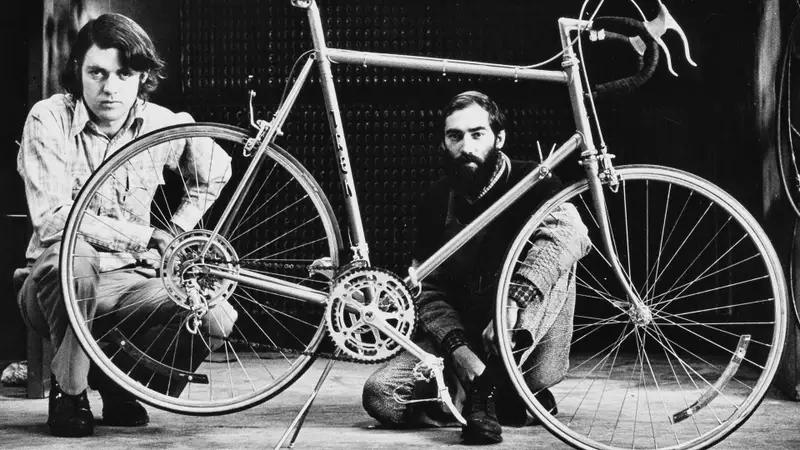
Early Road Bike Years: Steel, Craftsmanship, and Credibility
In the late 1970s and early 1980s, Trek gained a reputation for producing high-quality steel road frames. These rivalled European builders, but at a more accessible price.
Key early traits:
- Hand-built steel frames
- Attention to geometry and fit
- A focus on real-world ride quality
By the mid-1980s, Trek had established itself as one of the leading American road bike manufacturers, exporting bikes internationally and earning credibility among serious riders.
Trek and Innovation: Carbon Changes Everything
Trek’s biggest turning point came with carbon fibre.
While many brands hesitated, Trek invested heavily in:
- Carbon frame research
- In-house manufacturing
- Advanced composite engineering
The OCLV Carbon Breakthrough
In 1992, Trek introduced OCLV Carbon (Optimum Compaction, Low Void) — a manufacturing process that allowed lighter, stronger, and more consistent carbon frames.
This was revolutionary at the time.
Unlike many brands that outsourced carbon production, Trek:
- Designed
- Tested
- Built
their frames internally.
This commitment to carbon technology would soon pay off at the very highest level of the sport.
Trek’s Success at the Tour de France
The Trek road bike legacy is inseparable from its Tour de France dominance, particularly during one of the most successful (and controversial) eras in cycling history.
Trek’s First Tour de France Wins
Trek road bikes achieved their first Tour de France victories in 1999, when Lance Armstrong won the Tour riding a Trek 5500 OCLV carbon road bike.
Between 1999 and 2005, Trek bikes won seven Tour de France titles with Armstrong. This made Trek the most visible road bike brand in the world during that era.
While Armstrong’s victories were later stripped, Trek’s technological impact on professional cycling — particularly carbon development — remains undeniable.
Post-Armstrong Era: Rebuilding and Redefining
After the Armstrong era ended, Trek made a conscious effort to redefine its image and focus on:
- Transparency
- Athlete development
- Long-term credibility
This led to sponsorships with teams such as:
- RadioShack
- Trek-Segafredo (now Lidl-Trek)
Trek bikes returned to the Tour de France with renewed legitimacy — winning stages and Grand Tours with different riders and technologies.
Modern Tour de France Success
In the modern era, Trek road bikes have achieved success with riders such as:
- Alberto Contador (multiple Grand Tour wins)
- Fabian Cancellara (Tour de France stages & classics)
- Vincenzo Nibali
- Mads Pedersen
- Jasper Stuyven
Trek bikes have won:
- Tour de France stages
- Monument classics
- World Championships
- National championships
Their success now spans endurance, sprinting, climbing, and time trial disciplines.
Iconic Trek Road Bike Models
Over the years, Trek has produced some of the most influential road bikes in the sport.
Trek Madone
The Madone is Trek’s flagship aero race bike.
Known for:
- Aerodynamic tube shapes
- IsoFlow and IsoSpeed comfort tech
- Tour-level performance
It’s built for speed, racing, and marginal gains.
Trek Émonda
The Émonda is Trek’s lightweight climbing bike.
Key traits:
- Extremely low weight
- Stiff yet compliant ride
- Favoured on mountainous stages
This bike proves Trek can build a pure climber, not just aero machines.
Trek Domane
The Domane is Trek’s endurance road bike and one of the most popular in its category.
Highlights:
- IsoSpeed decoupler for comfort
- Wide tyre clearance
- Stability over long distances
The Domane is Trek’s answer to rough roads, cobbles, and endurance riding — and has won Paris-Roubaix.
Trek Timeline: History of Trek
1976 – Trek was founded in Waterloo, Wisconsin
Late 1970s – First steel road bikes built in a barn
1980s – Trek expands globally
1992 – Introduction of OCLV Carbon
1999 – First Tour de France win on a Trek road bike
2000–2005 – Trek dominates the Tour de France era
2010s – Madone, Émonda, and Domane platforms refined
2020s – Trek remains one of the world’s top road bike brands
Trek’s Design Philosophy Today
Modern Trek road bikes are built around three pillars:
- In-house engineering – from carbon layup to aerodynamics
- Rider-specific performance – geometry and fit options
- Long-term durability – not just race-day speed
Trek’s ability to produce race bikes, endurance bikes, and accessible entry-level road bikes — all under one roof — is one of its greatest strengths.
Why are Trek Road Bikes So Popular?
Trek’s success comes down to a few key reasons:
- Strong dealer network worldwide
- Wide range of price points
- Proven Tour de France pedigree
- Continuous innovation in comfort and carbon
- Reliable quality control
Whether you’re buying your first road bike or a Tour-level race machine. Trek likely has a model that fits.
Final Thoughts: Trek’s Place in Road Cycling History
Trek road bikes have shaped modern cycling more than almost any other brand. From pioneering carbon fibre technology to dominating the Tour de France and redefining endurance comfort, Trek’s influence runs deep.
While the brand’s history includes controversial chapters, its engineering legacy, innovation, and continued success make it one of the most important road bike manufacturers in cycling history.
Today, Trek remains:
- Technologically advanced
- Globally respected
- Deeply embedded in professional racing
- Trusted by everyday riders
Few brands have impacted road cycling as profoundly or as consistently — as Trek.