Legendary mountains that define cycling’s greatest race. Let’s take a look at the most famous Tour De France climbs.
The Tour de France is famous for many things, with dramatic breakaways, fierce rivalries, and unforgettable finishes. But above all, it’s the mountains that define the race.
Each year, the peloton tackles some of the most challenging climbs in Europe. These roads have witnessed historic attacks, heroic victories, and moments of pure suffering. For cycling fans and riders alike, these mountains have become legends.
Here are some of the most famous Tour de France climbs, the roads that have shaped the history of cycling’s greatest race.
Alpe d’Huez – The 21 Hairpins of Cycling History
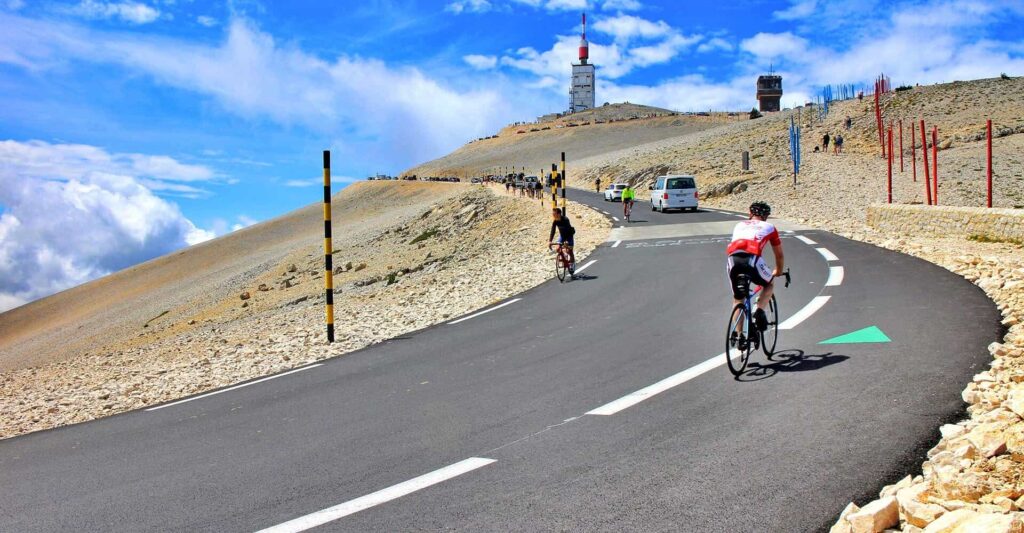
Few climbs are as instantly recognisable as Alpe d’Huez.
The climb stretches roughly 13.8 km with an average gradient of 8.1%, but its fame comes from the 21 numbered hairpin bends that wind up the mountainside. Each bend is dedicated to a past stage winner, adding to the climb’s rich history.
During the Tour, the roadside crowds here are legendary. Thousands of fans line the road, creating one of the most electric atmospheres in professional cycling.
Why it’s iconic:
- 21 famous switchbacks
- A regular summit finish in the Tour
- One of the most recognisable climbs in cycling
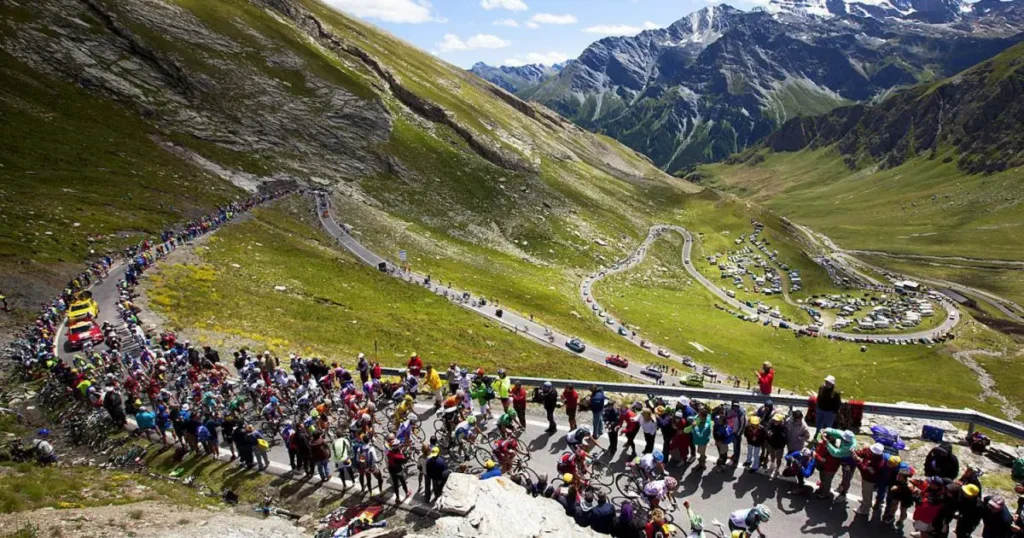
Mont Ventoux – The Giant of Provence
Rising above the Provence countryside, Mont Ventoux is one of the most feared climbs in the Tour.
The ascent from Bédoin covers 21.5 km with relentless gradients averaging around 7.5%. The lower slopes wind through forests, but near the summit, the landscape becomes barren and almost lunar.
Ventoux is famous not only for its difficulty but also for its brutal winds and scorching summer heat.
Why riders fear it:
- Long, exposed climb
- Brutal heat and wind conditions
- A stark, unforgettable summit
Col du Tourmalet – The Historic Pyrenean Giant
Located in the Pyrenees, Col du Tourmalet is one of the most historic climbs in the Tour de France.
It first appeared in the race in 1910, marking the moment when the Tour truly entered the high mountains.
The climb reaches an altitude of 2,115 metres, and its long, steady gradients have often been the setting for decisive attacks and dramatic battles for the yellow jersey.
Why it’s legendary:
- One of the most frequently used Tour climbs
- Rich history dating back more than a century
- Massive crowds and iconic summit statue
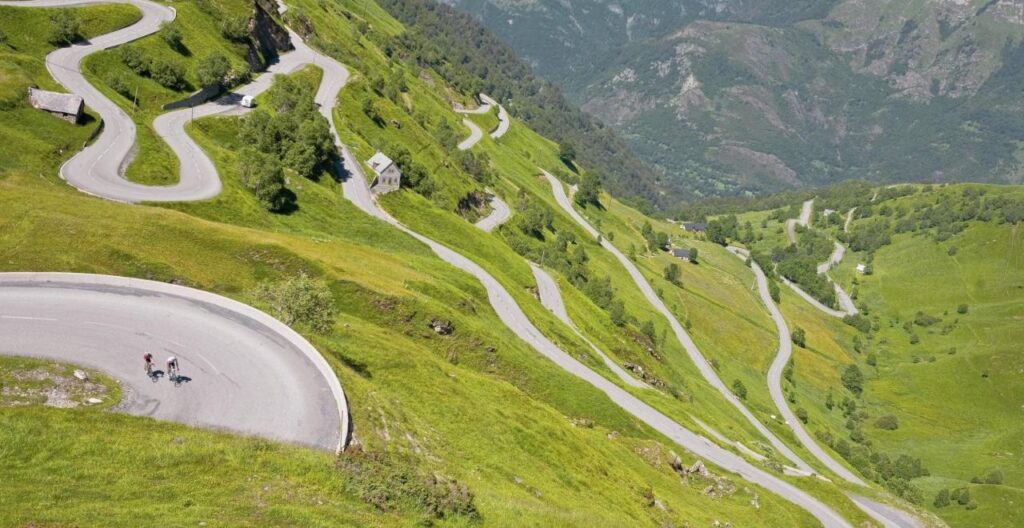
Col du Galibier – The High Alpine Challenge
The Col du Galibier is one of the highest and most demanding climbs regularly used in the Tour de France.
At 2,642 metres, Galibier offers riders stunning alpine scenery, but also extremely thin air and long gradients.
The climb is often used alongside neighbouring passes like the Col du Télégraphe to create epic mountain stages.
Why it’s famous:
- One of the highest roads in the Alps
- Massive alpine scenery
- Frequent turning point in mountain stages
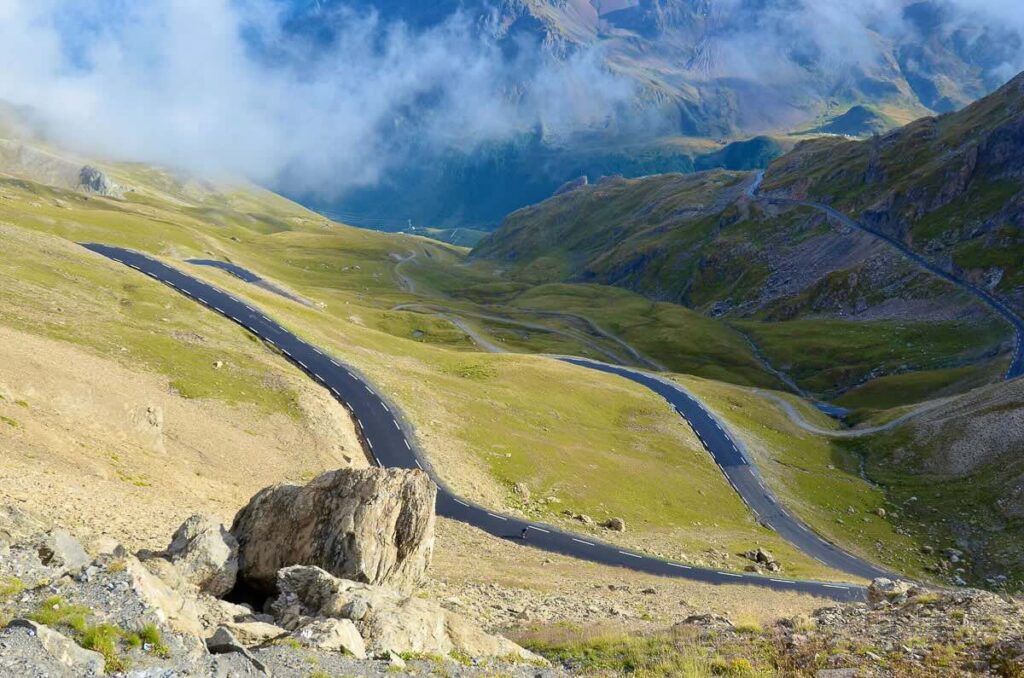
Col d’Aubisque – The Dramatic Cliffside Road
The Col d’Aubisque is one of the most scenic climbs in the Tour.
Located in the Pyrenees, it’s famous for its dramatic cliffside sections where the road seems carved directly into the mountains.
The climb offers incredible views but also serious difficulty, making it a favourite among both professional riders and cycling tourists.
Why it stands out:
- Spectacular cliffside roads
- Historic Tour stages
- One of the most scenic Pyrenean climbs
Why the Mountains Matter in the Tour de France
Mountain climbs are where the Tour de France is often won or lost.
On these steep roads, riders can no longer rely on drafting or team tactics alone. Instead, pure climbing ability and endurance determine who rises to the top.
These legendary climbs have witnessed some of the most memorable moments in cycling history, from dramatic solo attacks to epic battles between rivals.
For many cyclists, riding these roads is more than just a challenge. It’s a chance to experience the same mountains that have shaped the sport.
Final Thoughts
The mountains are the heart of the Tour de France.
Climbs like Alpe d’Huez, Mont Ventoux, and the Col du Tourmalet have become symbols of cycling’s greatest race, attracting riders from around the world who want to test themselves on the same legendary roads.
Whether you’re a professional racer or an amateur rider chasing a personal challenge, these climbs represent the ultimate cycling experience.
Because in the Tour de France, the mountains don’t just decide the race. They define it.